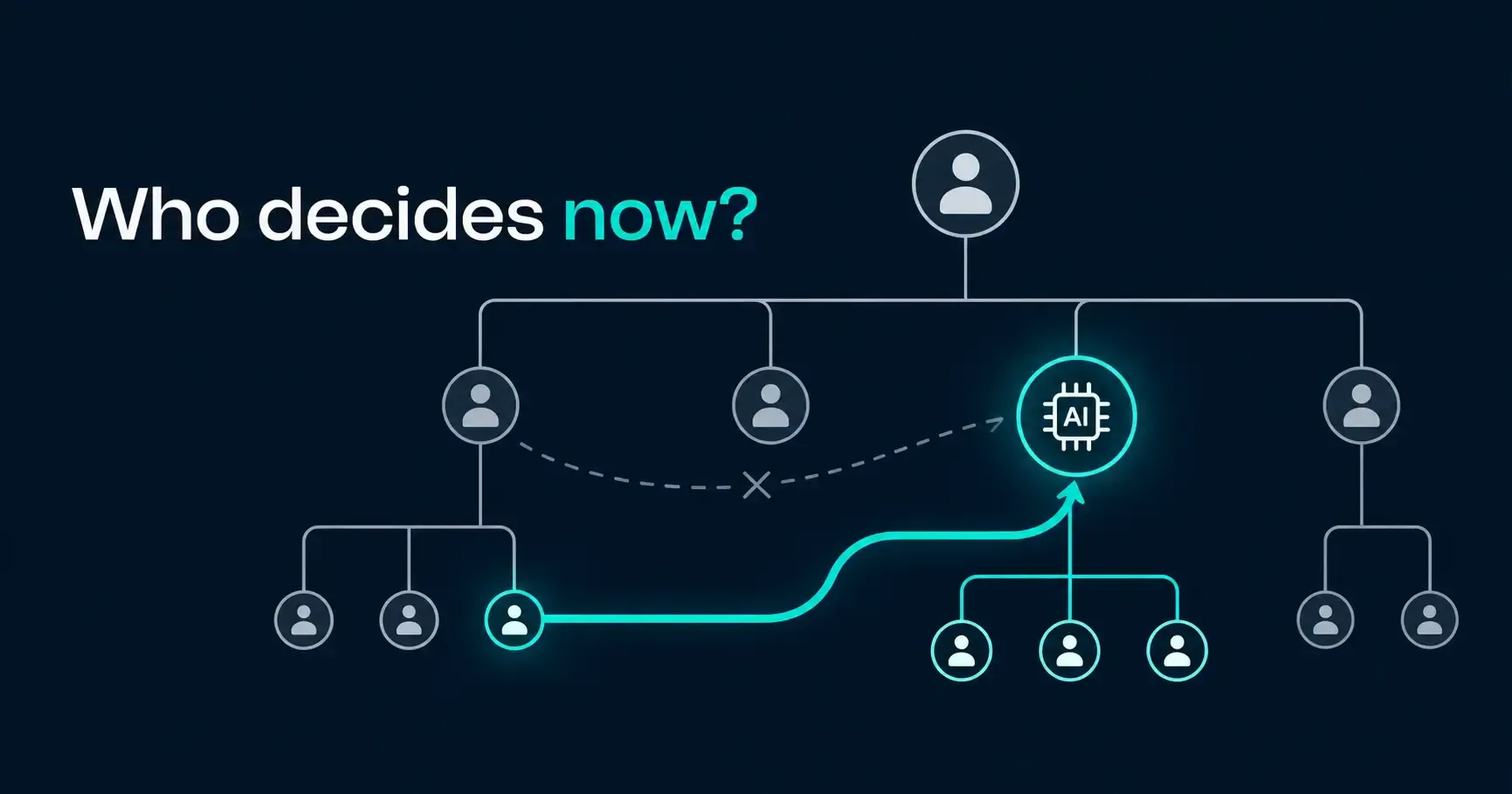
Why AI adoption stalls: the relevance gap.
You bought the licences. You ran the launch. A few months on, usage is flat and nobody can quite explain why. One of the most common reasons is also one of the most fixable: relevance.
If you've rolled out Copilot, ChatGPT or Claude and the uptake has been disappointing, you're in good company. Many of the conversations I have with leaders start here. The tools are live, the training has been done, and people are using AI lightly, if at all.
Sometimes the tool or the rules are part of the problem. But very often, people simply can't see how AI fits the work in front of them.
A recent example: I worked with a clinician whose administrator had been trying to get to grips with AI. She'd done what most people are told to do and watched the videos. They were generic, full of examples that had nothing to do with her day, and she came away more confused, and more nervous, than when she started.
We sat down for one session and worked through her actual tasks, using approved tools and appropriately sanitised material. Within a month, she had built two Copilot agents on her own, and they have boosted her productivity.
The tool hadn't changed. Her ability to see where it fitted her job had.
Why relevance matters
When I ask staff why they aren't using the AI tools they've been given, the answer I hear most often is: "I don't really know what I'd use it for."
That isn't laziness or resistance. It's a reasonable response to how AI is usually introduced. People are shown what the tool can do in general, then left to work out what it can do for them in particular. Many struggle to make that leap on their own.
The wider market shows a similar gap between using AI and embedding it.
Those figures don't prove relevance is the cause, but they show how often access arrives without real change in how work gets done.
Relevance comes in three levels.
Level 1
Tool relevance
"I know what Copilot can do."
Where most rollouts stop.
Level 2
Task relevance
"I know what it can do for this piece of my work."
Where value starts to appear.
Level 3
Workflow relevance
"We've changed how this work is routinely done."
Where value builds.
Adoption stalls when people are left at level one, not when the tool fails.
Signs your rollout has stalled at tool relevance
- Usage spiked after launch, then flattened
- Most use is basic: rewriting emails, summarising documents, quick questions
- People can't name a task in their own role that AI has changed
- Everyone received the same training, whatever their job
- You can see licence numbers, but not whether any work has changed
Why generic training doesn't close the gap
Webinars and videos are useful for orientation: here's the tool, here's how to prompt, here's what not to paste in. But knowing how a tool works isn't the same as being able to apply it to your own work. I've written about that distinction, and the Prosci ADKAR® model behind it, in AI in the Workplace: Why Change Management Is the Key.
Generic examples can also work against motivation. If every demo is "summarise this email", a site engineer, payroll officer or practice administrator can reasonably conclude AI isn't for them. When the examples feel remote and the rules feel unclear, confusion can turn into fear, as it did for the administrator above.
How to build relevance
1. Start with one team and its real work. Before any training, ask five questions:
The relevance-to-work test
- Which recurring tasks take up a disproportionate share of their time?
- Which of those involve drafting, summarising, analysing, researching or coordinating?
- Which are low-risk enough to experiment with safely?
- What would "better" look like: faster, higher quality, fewer errors or less rework?
- Could someone do the AI-assisted version again next week, without help?
The answers tell you where to start, and whether the gap is relevance, ability or something else.
2. Turn the answers into a few safe, repeatable workflows. Pick two or three tasks per team. For each, be clear about the approved tool, what information can go in, and what needs a human check. That clarity removes much of the hesitation that stops people trying.
3. Practise on real tasks, not demos. This is where customised training earns its place and generic training falls short. When people work on their own reports, emails and meeting notes, with someone on hand to help when the first output disappoints, they leave having done it rather than watched it. Training alone isn't the answer, as Sarah's story shows. What matters is whether it's built on people's real work and followed up afterwards. That's the thinking behind our customised AI workshops.
4. Equip managers and champions first. You don't need to train everyone at once. Managers who understand their team's workflows are best placed to spot where AI fits and keep it going. Why managers sometimes hold adoption back is covered in Why managers resist AI adoption.
5. Measure changed work, not logins. Track which workflows now use AI routinely, and whether quality, time or rework has improved. Share real examples in team meetings. Peer proof persuades more than any message from the top.
This won't fix everything. If the approved tool is slower than the workaround, or there are no clear rules on what's allowed, those need attention too. But relevance is usually the place to start, because it's the barrier people feel first.
Not "have we trained them?" but "can they see where it fits their work?"
Not sure where your rollout has stalled? I'm happy to talk it through. Often a first conversation is simply working through the questions above together, to find which teams and tasks to start with and whether customised, hands-on sessions would help.
Book a consultationSources
CPA Australia (2026). Aussie businesses risk falling behind in AI race, Business Technology Report 2026.
Datacom (2026). State of AI Index, as reported by IT Brief New Zealand.
Prosci. The Prosci ADKAR® Model.
AI BLOG