5 Leadership Shifts for 2027: Leading When AI Changes the Work
AI is moving from drafting emails to completing whole tasks. The leaders who thrive won't be the ones who use it most. They'll be the ones who change how they lead.
The question I hear most from leadership teams is: "Which AI tool should we roll out, and how fast?"
I think the better question is: when AI changes the work, how does leadership have to change?
My view, after more than 25 years in digital transformation and business change, and from my work with leadership teams across New Zealand and Australia, is that we're at the start of the biggest shift in how work gets done in a generation. AI is moving from drafting and summarising to analysing, planning and completing whole tasks. I expect that to accelerate sharply through 2027.
That's an extraordinary opportunity. Organisations that lead it well will serve customers faster, make better decisions and do work that simply wasn't possible before.
The future of leadership isn't about getting better at using AI. It's about leading organisations where intelligence is abundant and human judgement still decides the outcome.
Here are the five shifts I'd want every executive team to make in 2027.
1. Foundations: redesign the work, don't just speed it up
Before you use AI to accelerate a process, ask whether that process should exist in its current form.
The organisations I see getting real value aren't the ones with the most licences. They've picked a specific workflow, questioned how it should work, fixed the data underneath it and named someone accountable for the result. AI can help with the redesign too: mapping where time goes, spotting bottlenecks and testing alternatives.
Fonterra's use of machine vision to inspect every milk powder bag on its packing lines is a good illustration. It's an industrial case, not a template, but the principle travels to any function: a defined problem, clear controls and a measurable outcome.
In practice
- Choose two or three high-value workflows, not tools.
- Decide which to improve and which to rebuild from scratch.
- Measure business outcomes, not usage.
2. Adaptability: move at speed without losing control
The advantage goes to organisations that can make good decisions quickly as AI capability leaps forward.
What I demonstrated in workshops a year ago already looks dated, and the pace is increasing. As one executive in Anthropic's recent research put it, it can feel "like we're trying to throw darts at a spinning dart board." No executive can track every release. What you can do is design for fast, sound decisions. Move quickly on choices you can reverse, such as pilots and process trials. Slow down on those you can't, such as restructuring roles or giving AI access to sensitive data.
Good governance is what makes speed safe: a small group with authority to say yes quickly, clear guardrails, and a plain-English policy that keeps pace with the technology. Treat shadow AI as information. When people use unapproved tools, it's often because the approved path doesn't meet their needs.
This isn't only an internal question. Leaders also need to ask what AI will do to their market. What happens when competitors can deliver the same service at a fraction of the cost? What will customers start doing for themselves that they currently pay you for? What will set you apart when everyone has access to similar AI?
In practice
- Separate reversible from irreversible AI decisions, and fast-track the first.
- Give a small cross-functional group authority to approve uses within guardrails.
- Put "how will AI change our market?" on the strategy agenda every quarter.
3. Judgement: as intelligence becomes abundant, judgement becomes the premium
When analysis and advice are available to everyone, the advantage moves to knowing which questions to ask, which answers to trust and when to think for yourself.
This is the shift I find most important. AI is making high-quality research, drafting and analysis cheap and instantly available, and its reasoning is improving fast. That raises the value of what people uniquely bring: context, values, experience and the confidence to make a call. Critical thinking helps us challenge the answer. Experience and wisdom help us decide what to do with it. I explored the wider business implications in Future of Work: Intelligence as a Commodity.
The risk is leaders outsourcing their thinking. I describe AI to clients as a brilliant apprentice: fast, tireless and increasingly capable, but still able to be confidently wrong.
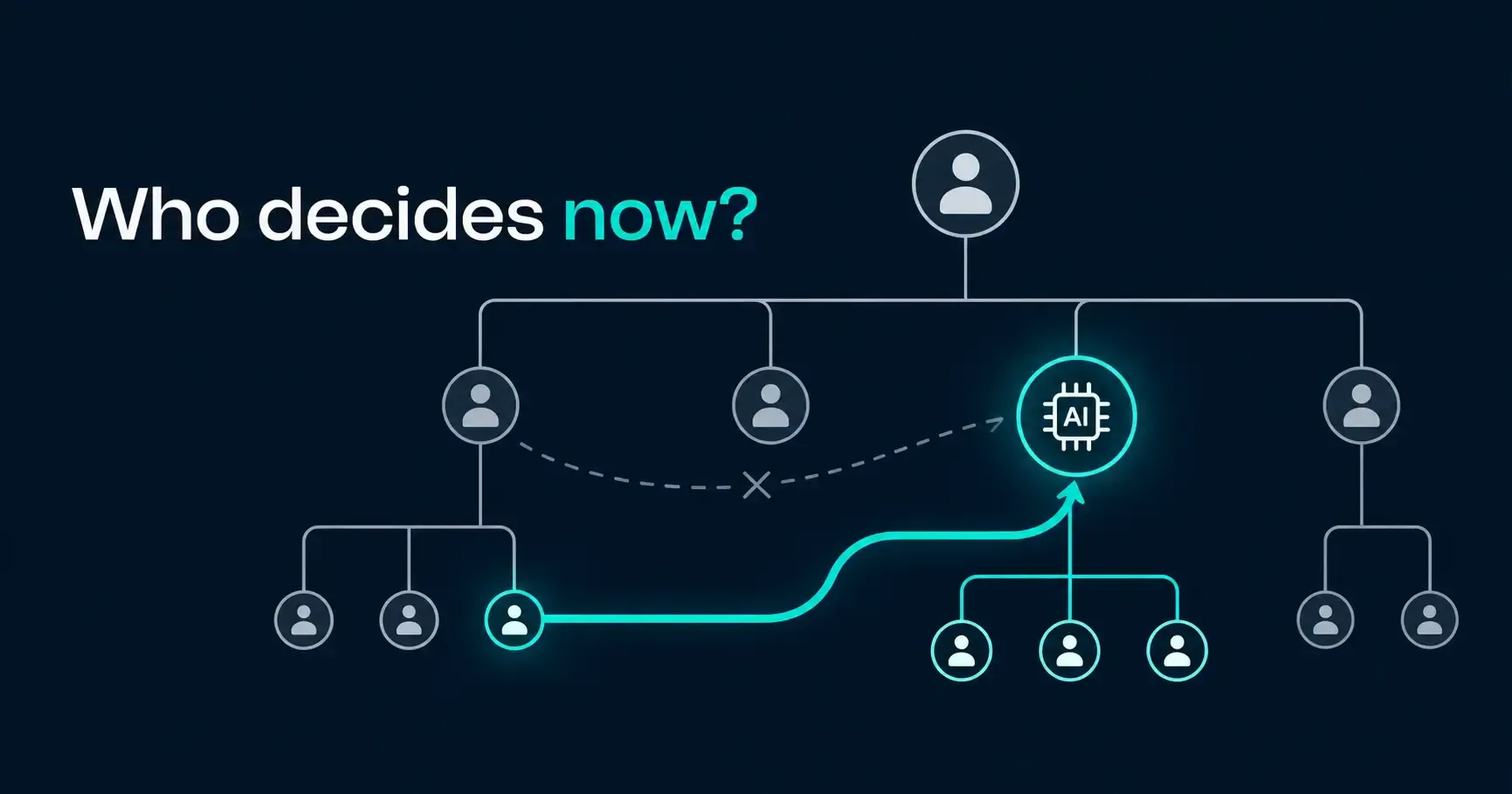
A decision can be delegated to a system. Accountability for deciding to delegate it cannot.
In practice
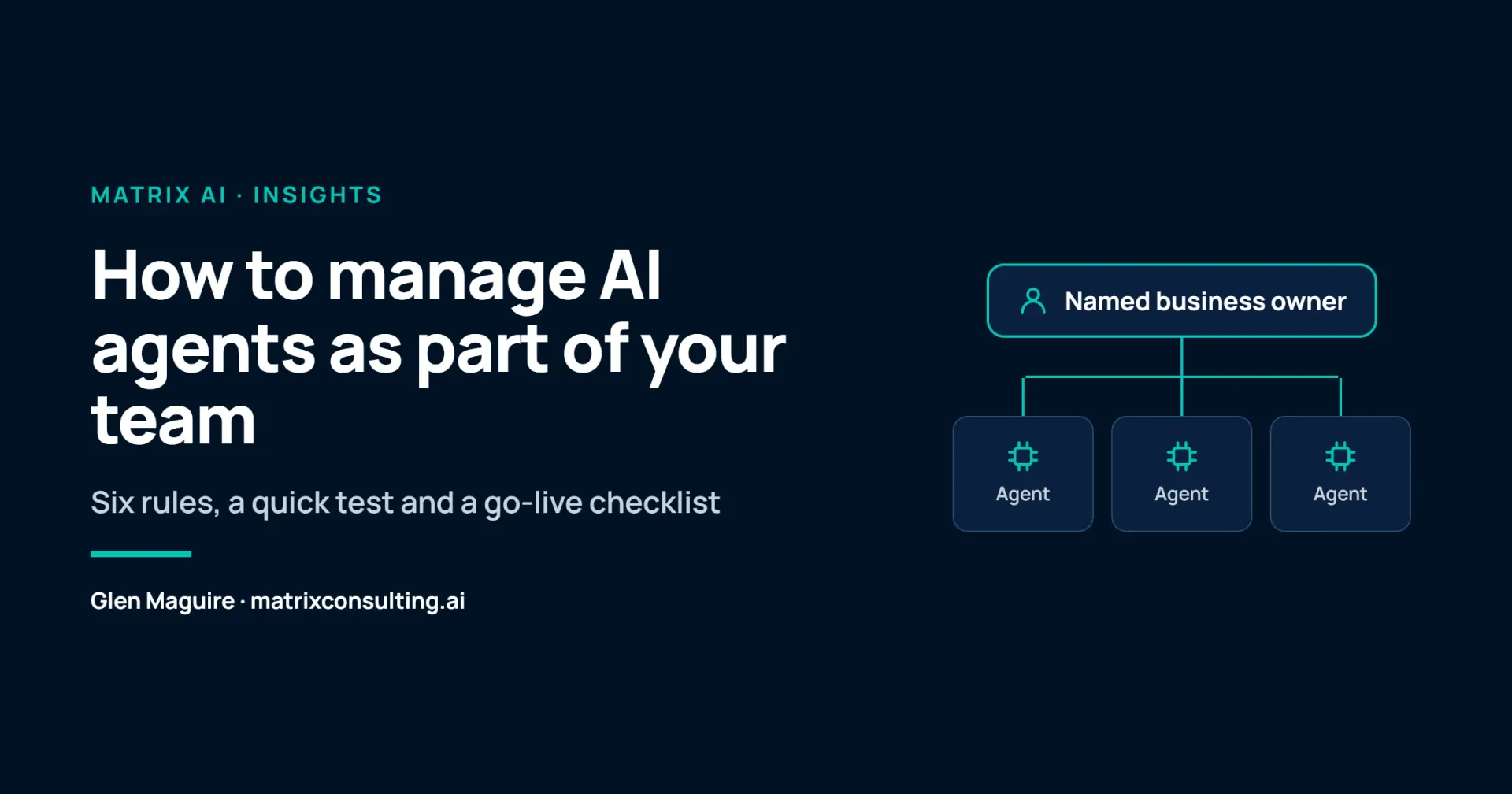
- Name an accountable owner for every AI use that affects customers, quality, safety or people.
- Make "how did you check this?" a normal question in meetings.
- Form your own view before asking AI, then compare the two.
4. Change: make AI relevant to every role
AI adoption is as much an organisational and behavioural challenge as a technological one.
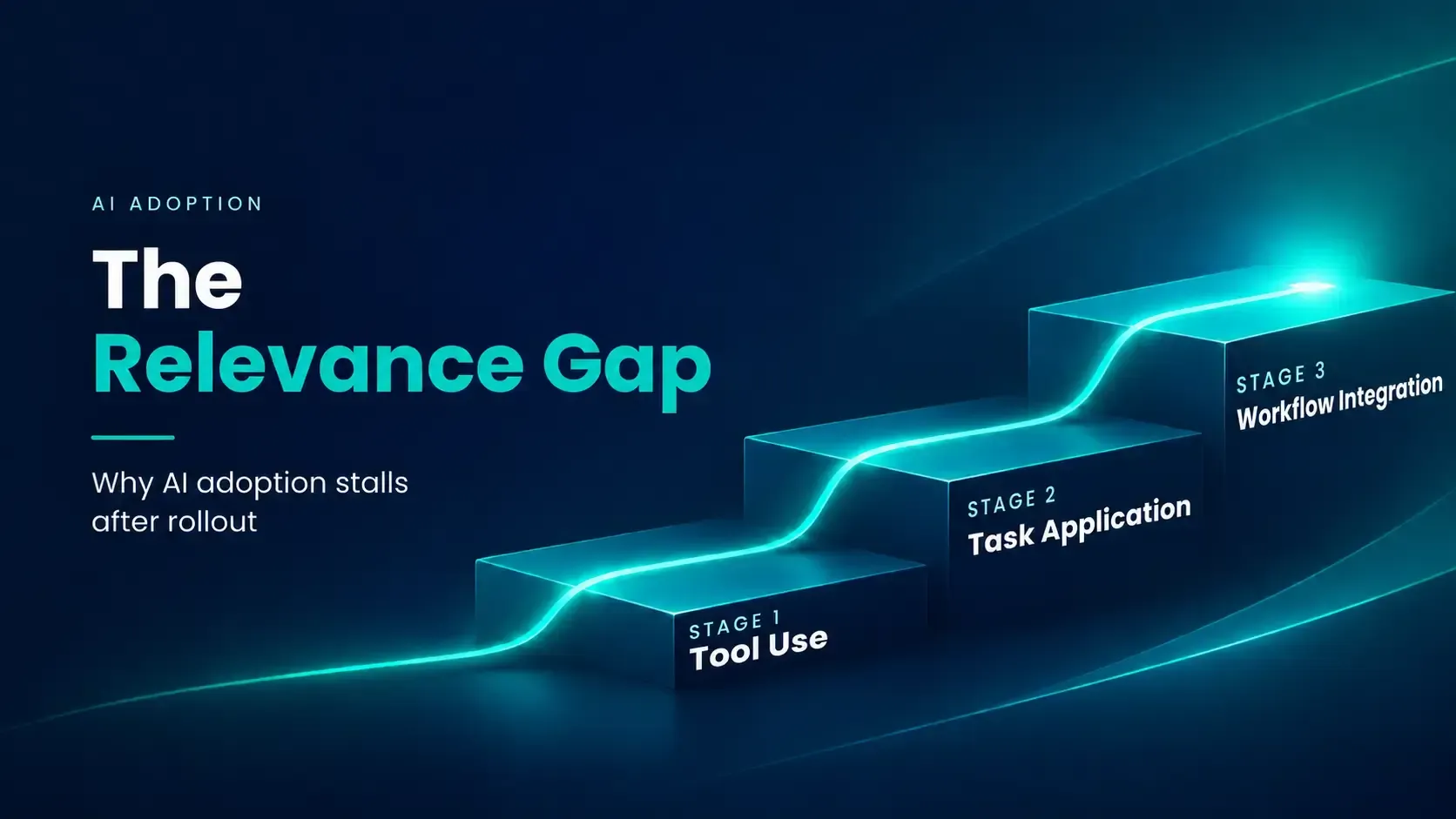
The biggest barrier I see is relevance. People hear about AI in general terms but can't see what it means for their own job, so they don't change how they work.
In my view, that caution makes it even more important to explain why change matters, show value in people's own work and be clear about who is accountable.
Be honest about jobs, too. AI will create new roles and make many existing ones more valuable. Some roles will be consolidated, and some will go. Early evidence suggests the first effect is on hiring rather than redundancies. In Anthropic's interviews with its enterprise customers, very few reported AI-driven layoffs, but most said they were hiring less than they otherwise would. Leaders who say so, and show how they'll help people move, earn the trust they'll need for what comes next.
In practice
- Build awareness and desire before training. Prosci's ADKAR model is a useful guide.
- Show each team two or three uses that matter in their own work.
- Involve frontline leaders early. They carry the message.
5. Capability: build the workforce you'll need next
Continuous learning is now an organisational responsibility, not something individuals fit in after hours.
The organisations investing in capability now will be the ones equipped to capture the opportunity.
There's a harder question underneath. Many of us built our judgement doing entry-level work that AI now does well. If that work shrinks, how will your future leaders learn? My answer is deliberately designed development: real exposure to customers, exceptions and decisions, with AI-assisted work supervised by experienced people. One US law firm in the same research does exactly this: junior lawyers take the AI's first draft and mark it up alongside a senior lawyer, so they still learn what good looks like.
Resilience matters here too, and it isn't something you can instruct. It comes from conditions leaders create: clear direction, time to learn, permission to experiment, and honesty about what's changing.
In practice
- Get the leadership team using AI on real work for a month, then compare notes.
- Fund protected time for learning, not just licences.
- Redesign development pathways where entry-level tasks are shrinking.
One question for your next leadership meeting
If AI changed a third of the work in your area over the next three years, which workflows, decisions and roles would you start redesigning now?
Planning your AI leadership agenda for 2027? I'm happy to talk it through. A first conversation is often simply working through these five shifts together, to see where your organisation is strongest and where to start.
Book a consultation See the Future of AI keynoteSources
KPMG and University of Melbourne, Trust, attitudes and use of artificial intelligence: a global study 2025.
Anthropic, Working with AI(November 2026). Note: Anthropic is an AI vendor and the interviewees were its customers.
World Economic Forum, Future of Jobs Report 2025.
Fonterra, How AI and automation are shaping the future of Fonterra's operations.