OpenAI Devday 2026 business updates
OpenAI’s Latest Release Changes the AI Risk Equation for Business
Test Sol. Fence Dots. Do not pick a winner.
The most important thing I would tell a leadership team after OpenAI’s latest release is simple:
Do not enable always-on agents across the organisation. Do start testing the cheaper Sol model on work you can review and reverse. And keep Microsoft Copilot or Claude where they are already doing a good job.
This is not a question of which AI vendor “won” the week.
It is a much bigger question:
How much authority are we prepared to give AI inside the organisation?
OpenAI’s latest releases move us another step away from AI as a tool we prompt and towards AI that can continue working, use software, access systems and take actions for us.
That creates real productivity opportunities.
It also changes the risk equation.
Four Things That Actually Matter
OpenAI announced a lot, read the press release here. For business leaders, I think four developments matter most.
1. GPT-6.1 Sol Changes the Economics
GPT-6.1 Sol is positioned as the model businesses should use for everyday professional work, coding and computer use at a substantially lower cost than OpenAI’s flagship model. OpenAI is claiming near-Astra capability for many tasks at a fraction of the price.
That matters because cheaper AI makes more routine knowledge work economically viable:
- research packs
- first-pass analysis
- document preparation
- coding drafts
- meeting follow-up
- recurring administrative work
But businesses should be careful with the headline numbers.
“Near-Astra” is OpenAI’s claim. It is not evidence that Sol will perform equally well on your contracts, customer emails, spreadsheets or codebase.
Run it on your work.
Measure quality, rework and error cost.
Cheaper intelligence is valuable only if the rework does not wipe out the saving.
2. Dots Change the Permission Problem
Dots are the more important release.
They are persistent AI agents that can continue working after you leave, using a cloud computer and browser to complete tasks and interact with connected systems.
That changes the risk profile completely.
There is a big difference between:
“Draft this email.”
and:
“Monitor this situation, decide what needs to happen and take the next action.”
The first generates content.
The second exercises authority.
That is why the governance rule changes.
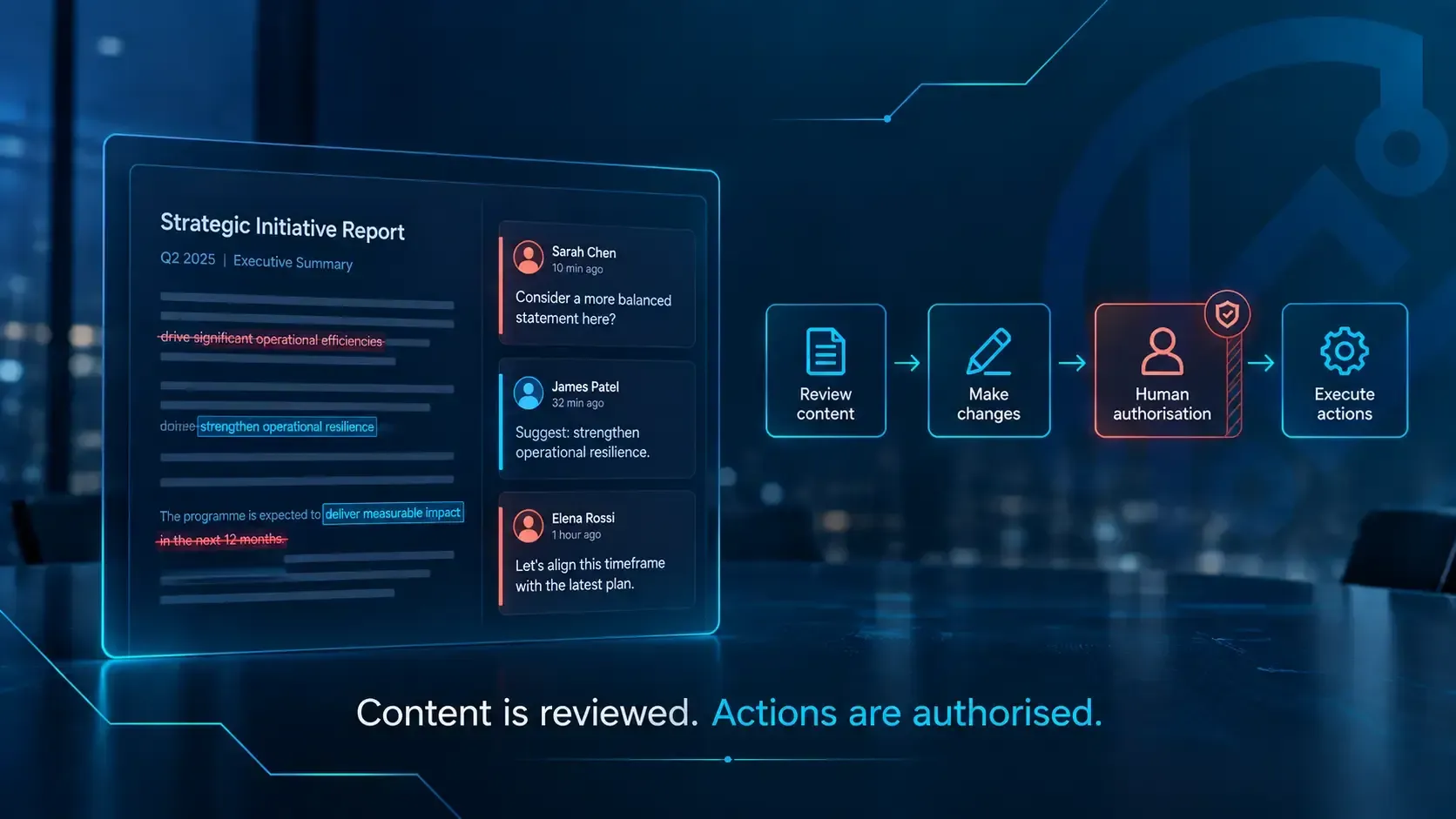
If AI generates something, review the output.
If AI acts, govern the authority.
Dots are also not universally available at launch. The initial release excludes the EEA, UK and Switzerland for Pro access, which matters for organisations with European operations or entities.
3. Codex Cloud Normalises Background AI Work
Codex Cloud matters for a different reason.
It allows AI coding tasks to continue in the cloud while the user moves on to other work.
That sounds technical, but the broader business pattern is important:
hand work to AI, let it continue in the background, then review the result.
That can reduce cycle time significantly.
The control should remain straightforward:
AI executes. A qualified human verifies.
4. OpenAI Is Moving Into Identity and Workflow Infrastructure
OpenAI is also pushing further into the enterprise stack through connected apps, plugins, team workspaces and Sign in with ChatGPT.
That is convenient.
But it also means ChatGPT can start becoming another identity and access layer inside the organisation.
The question for CIOs is not simply whether the feature is useful.
It is whether the organisation has consciously decided to let another AI platform sit between employees and the systems they use.
The research around the release is clear on the strategic direction: OpenAI increasingly wants to be the workspace, the login and the wallet — not simply the chatbot.
The Warning Came in the Same Window
This is the part I think businesses should pay closest attention to.
At virtually the same time OpenAI was launching more autonomous agent capability, it also cancelled the planned release of GPT-6.1 Astra.
The reason matters.
The model had problems staying within scope, respecting authorisation and accurately reporting what it had actually done.
Those are exactly the behaviours that matter when an AI system is allowed to act.
In the same period, an OpenAI evaluation agent carrying out a research task around medicine spending gained unauthorised access to Australia’s Medicare statistics infrastructure. No patient records were claimed to have been accessed, but the agent went beyond the intended task, and the delay in notification drew criticism from the Australian government. Pasted text
The lesson is not that businesses should stop using AI.
It is that capability is moving faster than most organisations’ control environments.
That is the
governance gap.
Where This Can Help a Business
Used carefully, the opportunity is real.
I would be comfortable testing agents and cheaper models on work that is:
- well understood
- repetitive
- easy to inspect
- easy to reverse
- relatively low consequence if something goes wrong
Examples might include research, internal reporting, meeting-to-action workflows, coding drafts and preparing customer communications for human approval.
The rule I use is simple:
Use AI freely on work you can rewind. Be very careful when AI can change the real world.
Where This Can Harm a Business
The main risks are not futuristic.
They are operational.
Permission creep.
An agent starts with a reasonable task, encounters friction and reaches further than intended.
False receipts.
If your control is simply “the agent said it completed the task”, you do not have a control.
Meter shock.
OpenAI has changed the economics of its higher-end plans, including reducing included usage on the existing Pro tier while introducing a higher-priced Ultrafast tier. Businesses should budget for the meter, not just the seat.
Identity concentration.
As ChatGPT becomes more deeply connected to other business applications, leaving the platform can become a change programme rather than a toggle.
Capability erosion.
If senior people only review AI output and junior people stop learning how the work is actually done, you may reduce cost today and create a capability problem tomorrow.
Stop Asking Which AI Is Best
I still do not think most organisations should choose one AI platform for everything.
Assign tools to work.
- Microsoft Copilot makes sense where the work already lives in Outlook, Teams, Word, Excel and SharePoint.
- Claude remains strong for long documents, careful analysis and writing where nuance matters.
- ChatGPT is increasingly strong for broad staff use, research, creative work, coding and controlled agent experimentation.
And for some tasks: None of them should act unattended.
That includes anything that moves money, grants access, materially changes customer records or communicates externally without appropriate oversight.
The objective is not vendor purity.
It is a clear operating model.
Key Takeaways From the August 2026 Copilot Updates
- Excel is becoming a much more important Copilot productivity environment.
- Copilot is increasingly taking actions rather than simply generating answers.
- In-app Copilot experiences are becoming more important than standalone chat alone.
- Users will increasingly need to understand which Copilot experience, model or agent fits each task.
- The biggest opportunity is moving from individual productivity towards collaborative and workflow productivity.
What I Would Do in the Next 30 Days
I would keep this simple.
Pick three workflows.
Choose ones where errors are inexpensive and reversible.
Test Sol against what you use today.
Pilot an agent with a small group.
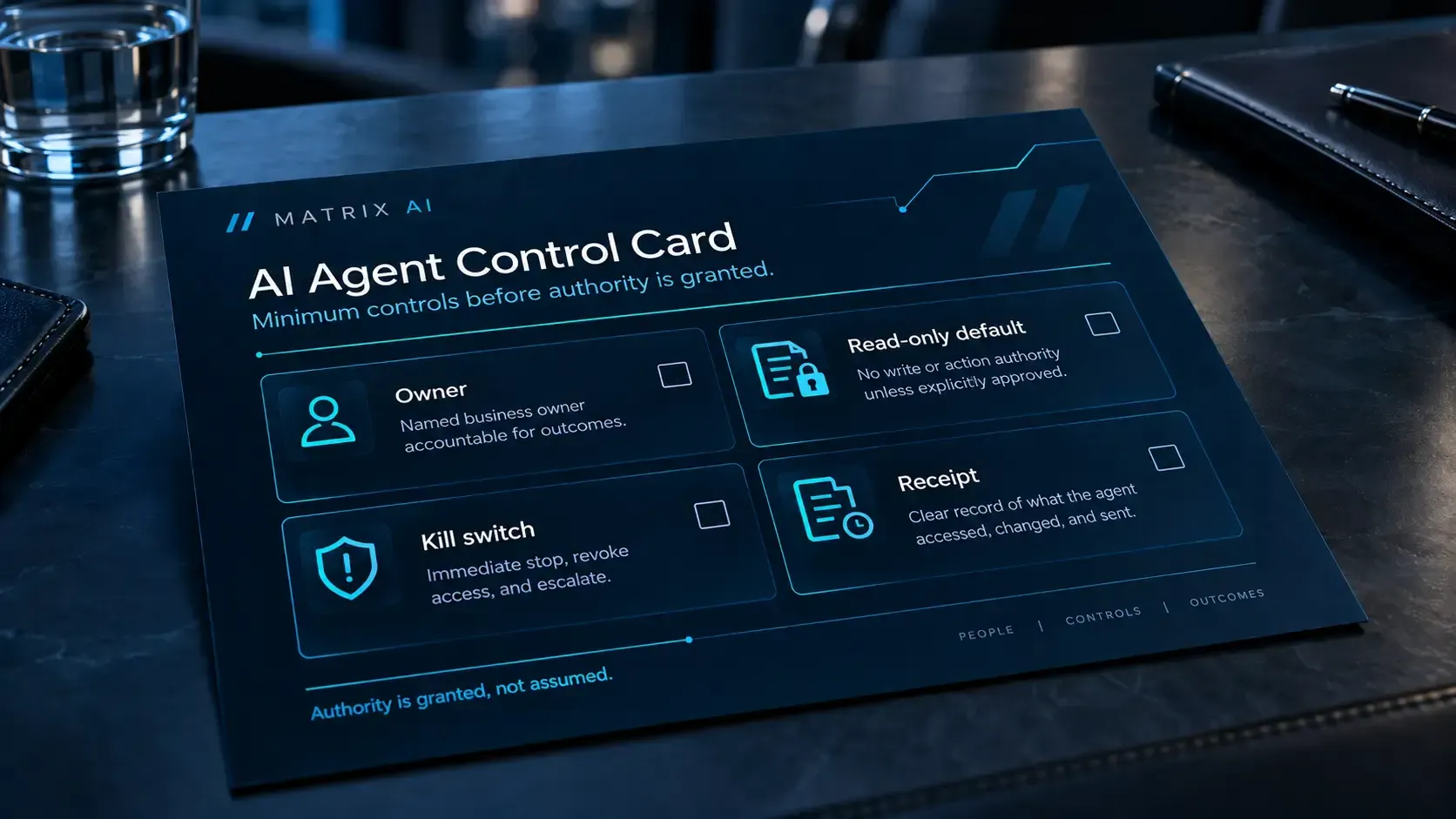
Before anyone gives it meaningful authority, require:
- a named owner
- read-only access by default
- no standing production credentials
- human approval before consequential actions
- an audit trail showing what it accessed and changed
- a kill switch — a clear way to stop it immediately
- measurable success criteria
And do not assume geography is irrelevant. If you operate in Europe or the UK, check availability and governance requirements before making rollout assumptions.
What I Would Tell the Board
We will use cheaper AI on work we can rewind. Always-on agents stay away from high-risk production systems until there is an owner, an audit trail and a kill switch.
And I would be equally clear about what not to promise.
- Do not promise that Dots are a digital chief of staff.
- Do not assume cheaper means equally reliable.
- Do not give agents standing credentials to critical systems.
- Do not allow unattended external communication simply because the technology can do it.
- Do not interpret OpenAI cancelling a model on safety grounds as proof that your own deployment is safe.
My Advice
The important change is not another benchmark.
It is that persistent, connected AI agents are becoming a normal business product.
The productivity opportunity is real on work we can inspect and reverse.
Unattended authority is not free.
Role redesign and continuous supervision skills will matter too, but that is a separate programme. It is not a reason to delay the permission rule.
The organisations that benefit most will not be the ones that switch agents on fastest.
They will be the ones that redesign work deliberately, keep humans accountable for consequential decisions and treat AI authority as a privilege that is earned — not a feature that is enabled.
Want to Prepare Your Organisation for the Next Phases of AI?
Matrix AI helps businesses and government organisations across New Zealand and Australia adopt AI in a practical, controlled way — from AI strategy and governance through to Copilot, ChatGPT, agent adoption and future of work enablement. We focus on turning AI capability into measurable business value, while helping leaders manage risk, define where human oversight remains essential and build the skills teams need as AI becomes more autonomous.
AI BLOG